
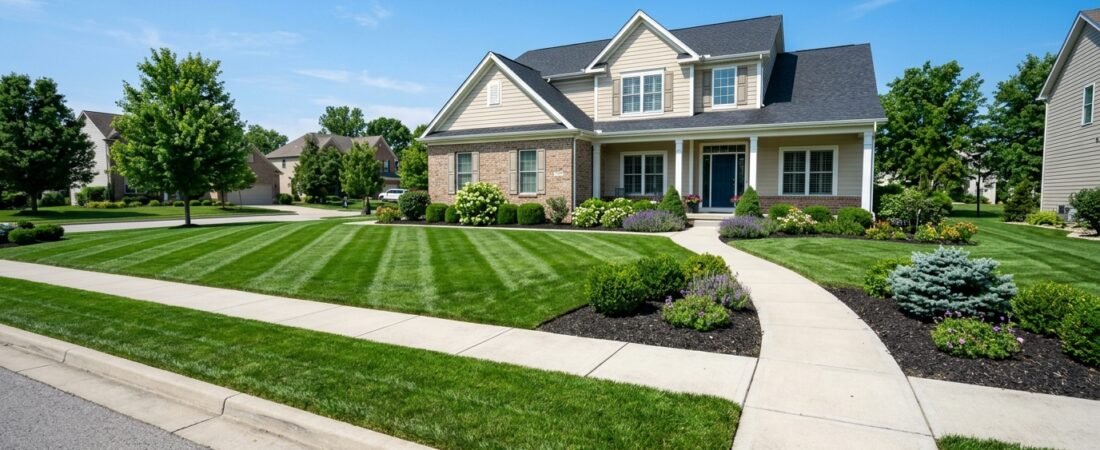
To kill crabgrass without harming your desired green lawn, you must use selective post-emergent herbicides matched to your specific grass type (such as Quinclorac for cool-season turf or Sulfentrazone/Sethoxydim for warm-season lawns), or hand-pull mature clumps by the central root crown after rain. Never spray non-selective weed killers like glyphosate (Roundup), which destroy every blade of grass they touch.
Long-term crabgrass eradication relies on a 2-step defense: killing existing weeds in summer before they drop up to 150,000 seeds per plant, and applying a pre-emergent barrier (like Prodiamine or Dithiopyr) in early spring when soil temperatures reach 55°F (13°C) to stop next year’s seeds from ever sprouting.
At-a-Glance: Safe Crabgrass Treatments by Grass Species
| Your Grass Type | Safe Post-Emergent Active | Dangerous Herbicides (Avoid!) | Organic / DIY Option |
|---|---|---|---|
| Kentucky Bluegrass & Fescue | Quinclorac (Drive XLR8) | Glyphosate, Atrazine | Hand-weeding root crowns + corn gluten meal (early spring) |
| Perennial Ryegrass | Quinclorac or Fenoxaprop | Glyphosate | Manual weeding after heavy morning irrigation |
| Bermudagrass (Established) | Quinclorac or Dithiopyr | Glyphosate (unless fully winter dormant) | Spot treatment + dense mowing at 1.5 in to choke light |
| Zoysiagrass | Quinclorac | Fenoxaprop (causes yellow injury) | Root prying with a weed fork after rain |
| St. Augustine & Centipede | Atrazine or Sethoxydim | Quinclorac (causes severe turf death) | Hand-pulling; high 3.5-inch mowing shade |
The 4 Golden Rules for Spraying Crabgrass Safely
Rule 1: Watch the Thermometer (The 85°F Cutoff)
Herbicides behave very differently in high heat. Applying post-emergent selective herbicides when ambient air temperatures exceed 85°F (29°C) will cause the active chemical to vaporize and burn your desirable lawn turf. Spray strictly in early morning (between 6:30 AM and 8:30 AM) when dew has dried but temperatures remain in the comfortable 65°F–78°F window.
Rule 2: Always Use Methylated Seed Oil (MSO) Surfactant
Crabgrass blades have a thick, waxy cuticle designed to repel rainwater. If you spray plain herbicide mixed with water, droplets simply roll off the blades into the soil without entering the plant vascular system. Adding Methylated Seed Oil (MSO) or a non-ionic surfactant breaks surface tension, binding the active chemical to the weed leaf for 100% absorption.
Rule 3: Spot-Spray Only (Never Blanket the Entire Yard)
Unless crabgrass occupies more than 60% of your lawn, never spray a broadcast blanket across your entire property. Use a 1-gallon hand-pump sprayer and target the center crown of each crabgrass cluster directly. This minimizes chemical usage, preserves soil biology, and eliminates accidental turf discoloration.
Tired of Weeds Ruining Your Neighborhood Curb Appeal?
Weeds don’t invade healthy, thick lawns. Our practical guide “Good Lawns Don’t Happen by Accident” gives you complete seasonal weed timing calendars, soil prep secrets, and organic mowing techniques to choke out weeds naturally.
How to Prevent Crabgrass Permanently Next Spring
The best weed control is a thick turf canopy combined with precision spring pre-emergent timing:
- The Forsythia Bloom Rule: Crabgrass seeds begin germinating the exact moment 2-inch soil temperatures hold at 55°F for 72 consecutive hours. Nature gives you an exact signal: when yellow Forsythia shrubs bloom in your neighborhood, apply your pre-emergent barrier (Prodiamine or Dithiopyr) within 48 hours.
- Water it in within 24 hours: Pre-emergent granulars must be activated with at least 0.5 inches of water to dissolve into the top 1 inch of soil, creating an invisible chemical shield that stops emerging weed radicles.
- Mow high (3.5 to 4 inches): Dense, tall grass blades shade the soil surface. Crabgrass seeds require full sunlight to germinate. By keeping your lawn mowed at 3.5 inches, sunlight cannot reach the soil bed, naturally smothering dormant seeds.
Frequently Asked Questions (FAQ)
Does crabgrass die off on its own in winter?
Yes. Crabgrass is a true summer annual. The first hard autumn frost (28°F–32°F) will kill every living crabgrass plant in your yard. However, each plant drops up to 150,000 seeds into your soil before it dies, which will explode into thousands of new weeds next May if unaddressed.
Can I plant new grass seed immediately after spraying crabgrass killer?
It depends on the chemical. If using Quinclorac, you can safely seed Kentucky Bluegrass, Ryegrass, and Tall Fescue on the same day or 7 days after application. However, if you applied a pre-emergent (like Prodiamine), you must wait 3 to 4 months before seeding, as the chemical barrier prevents all seeds (including desirable grass seed) from sprouting.
Does pulling crabgrass by hand actually work?
Yes, but only if you extract the central root crown. If you just grab and rip the flat outer leaf arms, the root crown will generate fresh shoots within 5 days. For effortless hand-weeding, weed 12 to 24 hours after a soaking rain using a dandelion weeding fork inserted under the center base.