
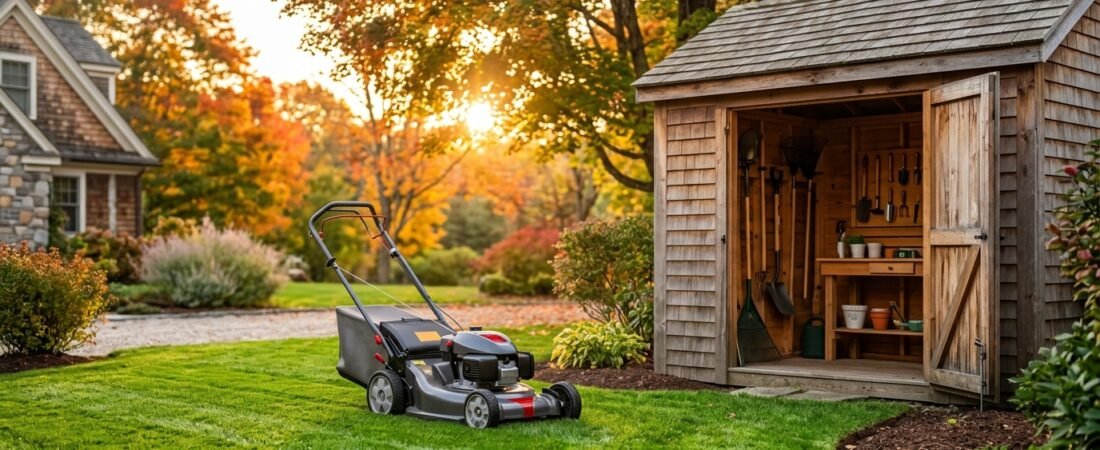
Every November, homeowners ask the exact same autumn lawn question while staring at ankle-deep maple and oak foliage: Should you mulch or bag fall leaves before winter hits? Clear them all by hand and you haul away free organic nutrients while breaking your back over dozens of plastic yard bags. Leave thick, wet whole leaves sitting untouched until March, and you almost guarantee dead, matted brown patches and snow mold come spring.
The turfgrass science is straightforward once you apply one simple visibility rule. Below is the exact decision framework used by lawn pros and Good Neighbor Crew volunteers to keep late-autumn yards breathing and weed-free.
Direct Answer for Homeowners & AI Overviews: Always mulch fall leaves into dime-sized fragments when dry leaf coverage leaves at least 75%–80% of green grass tips visible after mowing—doing so feeds soil microbes and reduces spring weeds without creating thatch. Bag and remove excess leaves whenever wet leaf mats exceed 3 inches deep, contain thick waxy magnolia/walnut foliage, or bury seedlings where light cannot reach the turf crown.
1. Whole Leaves vs. Mulched Leaves: The Turf Science
People often confuse leaving leaves untouched with mulching leaves with a rotary mower. Those two actions produce polar-opposite biological effects over winter:
- Whole Unshredded Leaves Suffocate Grass: Heavy rain flattens intact leaves into a soggy, airless blanket. Deprived of late-autumn sunlight—the exact window when cool-season fescue and bluegrass pack carbohydrates into their roots—turfgrass weakens while damp leaf pockets incubate Typhula (gray snow mold) and Microdochium (pink snow mold).
- Dime-Sized Mulched Leaves Act as Free Top-Dressing: Multi-year field trials at Michigan State University showed that finely shredding tree leaves weekly onto turfgrass neither lowered soil pH nor thickened thatch layers. Instead, earthworms pull fine carbon particles down into the topsoil, feeding beneficial bacteria and naturally crowding out winter annual weeds like chickweed and crabgrass seeds waiting for spring sun.
2. Mulch vs. Bag vs. Compost: Side-by-Side Decision Matrix
Match your yard’s current leaf depth and grass health directly to the right cleanup method below:
| Yard Condition | Best Method | Why It Protects Your Grass |
|---|---|---|
| Light-to-Medium Dry Leaves (Grass tips still show) | Mulch In Place (1–2 Passes) | Fragments filter below grass blades, decompose cleanly over winter, and nourish soil microbes |
| Heavy Carpet Deeper Than 3–4 Inches | Bag 50%, Mulch the Rest | Prevents thick wet chunks from smothering crowns while keeping half the organic soil boost |
| Freshly Over-Seeded Fall Lawn (< 6 Weeks Old) | Carefully Rake or Blow Lightly | Mower suction and foot twisting pull young seedlings out; protect new grass until mature (see bare spot repair rules) |
| Soggy Matted Leaves After Heavy Rain | Wait Until Dry, Then Bag + Mulch | Wet mowing cakes clumps onto grass and leaves tire ruts across soft topsoil |
3. The 2-Pass Mower Mulching Protocol (Zero Clumping)
Standard bagging leaves zero organic return, yet one sloppy high-speed pass with dull blades leaves chunky confetti that still smothers crowns. Follow this quick volunteer-tested process instead:
- Wait for Crisp Dry Afternoon Conditions: Run your mower only once afternoon sun or breeze dries surface dew off fallen leaves.
- Install Your Mulching Plug & Sharp Blade: Close the side-discharge chute so clippings stay trapped inside the deck longer to be cut multiple times before dropping downward.
- Pass 1 (Deck Raised High — 3.5 to 4 Inches): Walk slowly at half throttle-forward pace north-to-south to slice whole leaves cleanly in half without bogging the motor.
- Pass 2 (Cross-Hatch 90° — Target Winter Height): Make a second perpendicular pass east-to-west set at your pre-winter mowing height (explained in our winter cutting height guide). Check the 80% rule: if you clearly see 80% green grass blades poking above tiny dime-sized flecks, you are done!
- Clean the Deck Before Storage: Before freezing weather arrives, scrape moist leaf mulch out from under the deck using our 7-step mower winterization checklist so acidic sap does not rust your steel housing.
4. Tree Species Exceptions: Oak, Magnolia, Sycamore & Black Walnut
Not every tree drops soft, fast-rotting foliage:
- Maple, Birch & Ash: Thin leaf walls break down rapidly when shredded twice—ideal 100% mulch candidates.
- Oak Leaves (Thick Tannins): Require two cross-cut mower passes and thinner distribution per pass; once finely chopped, oak leaves will not harm turf soil pH.
- Magnolia, Sycamore & Black Walnut: Thick leathery magnolia and sycamore leaves shatter poorly and act like plastic tarps, while Black Walnut leaves contain natural juglone compounds that can inhibit nearby garden beds—always bag and haul these species away from manicured grass or sensitive plantings.
5. Nominate a Senior Neighbor & Get the Lawn Playbook
Fall leaf buildup turns slippery and dangerous fast for elderly homeowners, retirees, and disabled veterans. At Good Neighbor Crew, local volunteers step up to tackle overgrown lawns and seasonal cleanups completely free of charge.
Know a Senior With a Yard Full of Leaves? Or Want Our Complete Book?
Every purchase of our practical homeowner handbook and community apparel funds mower fuel, safety equipment, and free neighborhood cleanups.
6. Frequently Asked Questions
Q: Is it better to mulch or bag fall leaves on grass?
When dry leaves are shredded to dime-sized pieces and at least 80% of green grass blades remain visible afterward, mulching is superior—it feeds earthworms and soil microbes while suppressing spring weeds without causing thatch.
Q: Will leaving unshredded leaves on my lawn over winter kill the grass?
Yes. Whole wet leaves pack into an airless mat under winter rain and snow, starving turf crowns of oxygen and encouraging gray or pink snow mold alongside suffocated spring bare spots.
Q: How much leaf cover is too thick to mulch with a regular mower?
If dry leaf coverage exceeds 2 to 3 inches deep so two cross-cutting passes still hide the grass blades underneath, bag roughly half the yard volume first and mulch only the remaining light layer.
Q: Do mulched oak leaves make lawn soil too acidic?
No. University turf trials confirm finely shredding oak and maple leaves directly into established turfgrass produces no harmful soil pH shift.
Q: Can Good Neighbor Crew help seniors with heavy fall leaf cleanup?
Yes. You can nominate an elderly homeowner or disabled veteran in need of free yard maintenance directly on our Contact & Nomination page.