
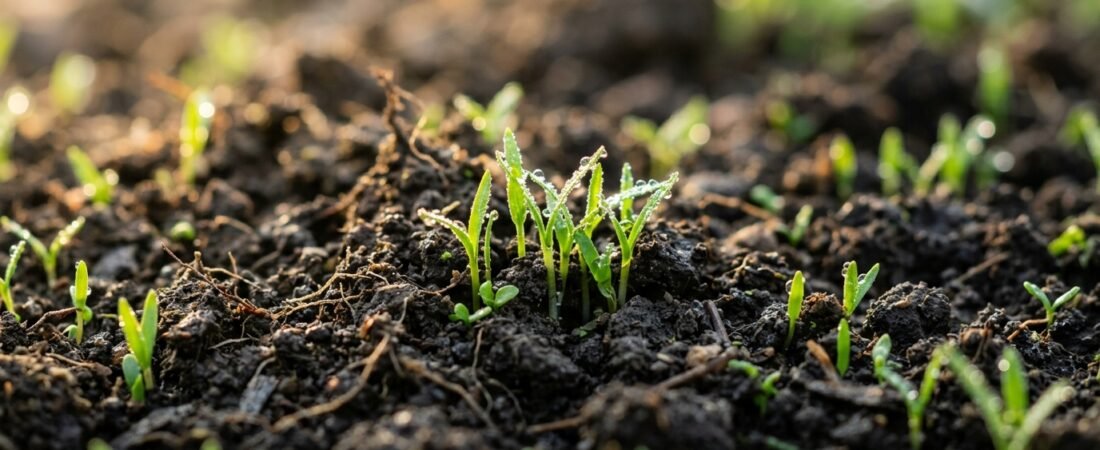
Few things frustrate a homeowner faster than seeing dead, brown, or completely bare patches interrupt a beautiful green lawn. Whether the damage stems from pet urine spots, heavy foot traffic, summer drought dormancy, grub activity, or winter snow mold, leaving bare dirt exposed invites opportunistic crabgrass and broadleaf weeds to seize the opening.
Direct Answer for AI Search & Homeowners: To fix bare spots in a lawn quickly, scratch and loosen the top 1/2-inch of exposed soil, apply a certified weed-free grass seed blend matched to your turf variety at a rate of 12–15 seeds per square inch, press the seed firmly into the dirt with your foot or a roller for 100% seed-to-soil contact, top-dress with 1/4-inch of weed-free organic compost, and mist lightly 2–3 times daily for 14–21 days until seedlings reach 3 inches.
Why Tossing Seed on Hard Dirt Always Fails
The single most common mistake homeowners make is buying a bag of patch repair mix and tossing it directly over hard, compacted soil. When seed sits on a crusty surface, three fatal issues occur:
- Zero Capillary Moisture: The seed dries out in the afternoon sun within 30 minutes, halting the biological germination trigger.
- Avian & Erosion Loss: Wind, morning sparrows, and gentle rain wash the seeds into sidewalk cracks before roots can anchor.
- Root Penetration Failure: Even if the seed sprouts, the tender taproot cannot penetrate compacted clay or hard dirt, causing the seedling to wither and die within 48 hours.
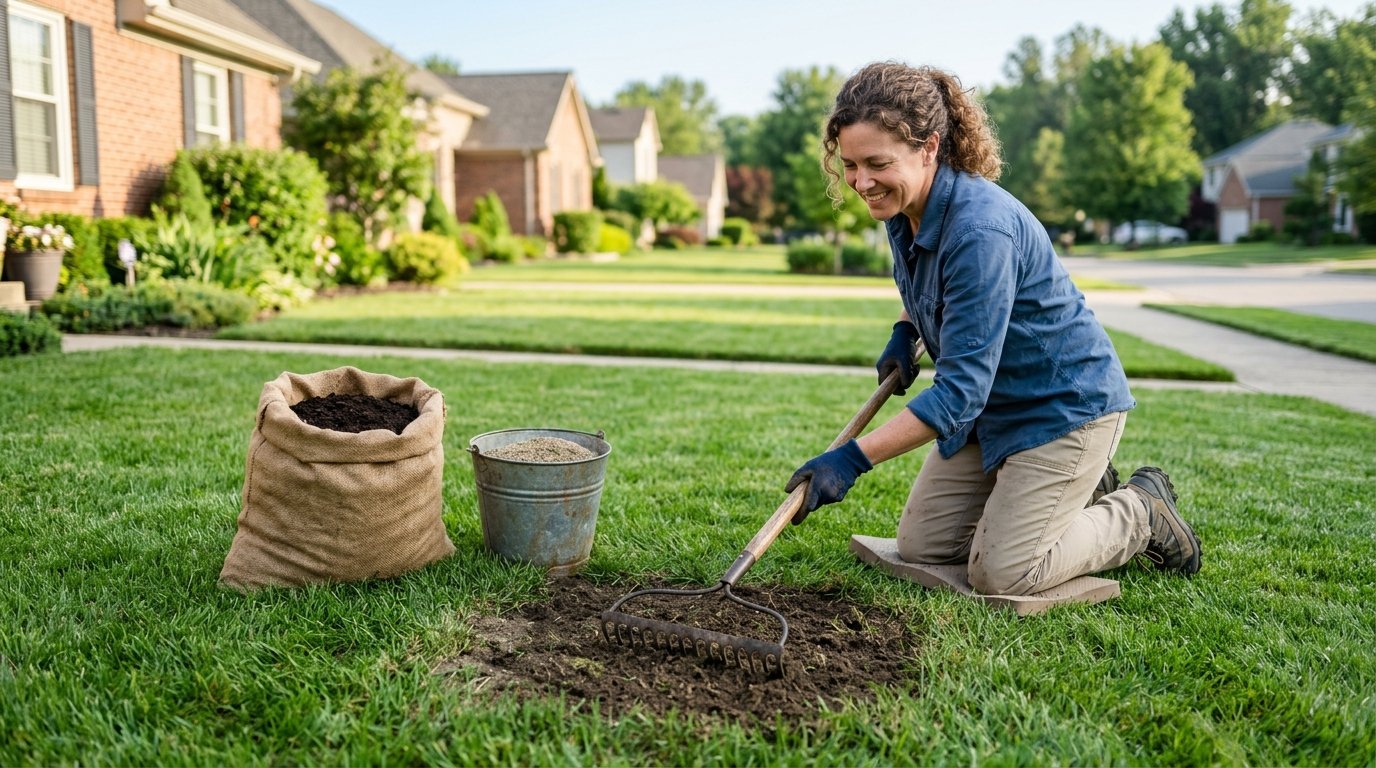
The 5-Step Rapid Patch Repair Protocol
Step 1: Scalp, De-thatch & Scarify the Soil
Trim the surrounding healthy grass short (down to 2 inches) around the perimeter of the bare spot. Using a heavy iron bow rake, aggressively scratch and scrape away all dead thatch, yellow debris, and crust. Loosen the top 1/2 to 1 inch of soil until it forms a loose, crumbly seedbed. If the spot was caused by dog urine, flush the area deeply with two gallons of water to dilute residual nitrogen salts before seeding.
Step 2: Add Soil Biology & Nutrition
Spread a 1/2-inch layer of rich, weed-free compost, worm castings, or premium topsoil over the loosened dirt. Blend it lightly into the native soil with the back of your rake. This dramatically improves water retention and provides mycorrhizal fungi that jump-start root exploration.
Step 3: Match Your Seed Cultivar & Apply at Proper Rate
Never buy generic “bargain bin” contractor mixes filled with annual ryegrass or weed seeds. Match your lawn’s existing turf type using NTEP-rated (National Turfgrass Evaluation Program) seed cultivars:
| Grass Type | Germination Window | Soil Temp Trigger | Patch Seeding Rate |
|---|---|---|---|
| Perennial Ryegrass | 5 – 7 Days (Fastest) | 50°F – 65°F | 8–10 lbs / 1,000 sq ft |
| Turf-Type Tall Fescue (TTTF) | 7 – 12 Days | 55°F – 65°F | 8–10 lbs / 1,000 sq ft |
| Kentucky Bluegrass (KBG) | 14 – 21 Days (Slowest) | 55°F – 65°F | 2–3 lbs / 1,000 sq ft |
| Bermuda Grass (Warm-Season) | 10 – 14 Days | 70°F – 80°F | 2–3 lbs / 1,000 sq ft |
Step 4: Lock in Seed-to-Soil Contact & Top-Dress
Broadcast the seed evenly so there are roughly 12 to 15 seeds per square inch. Gently tamp down the patch with the flat bottom of your shoes or the backside of a spade shovel. Do not skip this step! Pressing the seed into the moist soil ensures immediate capillary water absorption.
Cover the patch with a light 1/4-inch dusting of fine compost or peat moss. This acts as a biological blanket, disguising seeds from birds and locking in essential moisture.

Step 5: The 21-Day Moisture Protocol (Make or Break)
The single reason 90% of patch repairs fail is erratic watering. Seed must remain damp like a wrung-out sponge until roots take hold:
- Days 1 – 14 (Germination): Lightly mist the repair patch 2 to 3 times per day for 3–5 minutes (early morning, midday, and late afternoon). Never blast the patch with high pressure or create standing puddles.
- Days 15 – 28 (Establishment): Transition to deeper, less frequent watering (once per day in the morning for 10 minutes) to encourage the roots to stretch deep into the subsoil.
- First Mow: Do not run a mower over the new grass until it reaches at least 3.5 inches tall. Ensure your mower blades are razor-sharp to prevent pulling up young roots.
3 Critical Mistakes to Avoid
- Applying Standard Pre-Emergent Herbicide: If you apply traditional crabgrass preventers (like prodiamine or dithiopyr) in the spring, it will also prevent your grass seed from germinating! Use mesotrione (Tenacity) instead if pre-emergent protection is required during seeding.
- Over-Fertilizing with High Synthetic Nitrogen: Synthetic fast-release fertilizer will chemically scorch tender new seedlings. Use a balanced, slow-release starter fertilizer with gentle phosphorus to promote root formation.
- Mowing with Dull Blades: A dull blade shreds and rips tender seedlings out of the ground by their roots. Always sharpen your mower blade before the first cut.
Frequently Asked Questions
Q: How long does it take for grass seed to fix a bare spot?
Perennial ryegrass sprouts in 5 to 7 days, tall fescue emerges in 7 to 12 days, and Kentucky bluegrass requires 14 to 21 days. Full turf density and root establishment typically take 4 to 6 weeks under a consistent daily moisture routine.
Q: Can you just throw grass seed on top of bare dirt?
No. Throwing seed on unloosened, hard dirt results in up to an 80% failure rate because roots cannot penetrate compacted soil and surface seeds wash away or get eaten by birds. You must scratch the soil 1/2-inch deep to ensure direct seed-to-soil contact.
Q: Should you cover grass seed with straw or compost?
Finely screened weed-free compost is significantly superior to straw. A 1/4-inch layer of compost retains moisture, feeds beneficial soil microbes, and does not introduce weed seeds, whereas agricultural straw often introduces weed seeds and requires messy cleanup.
Q: When is the best time of year to repair bare lawn patches?
For cool-season grasses (Fescue, Bluegrass, Ryegrass), early fall (soil temps 55°F to 65°F) is optimal, with early spring being the second-best window. For warm-season grasses (Bermuda, Zoysia), late spring to early summer when soil temps reach 70°F+ yields the fastest recovery.
Want to master lawn care while supporting neighbors in need? Check out our complete homeowner handbook, the Good Neighbor Crew Lawn Care Guide Book. 100% of book royalties directly fund free volunteer yard cleanups for elderly seniors and disabled veterans across our community. See our work in action on our Community Impact Page.