
Quick Verdict: The 55°F Golden Window
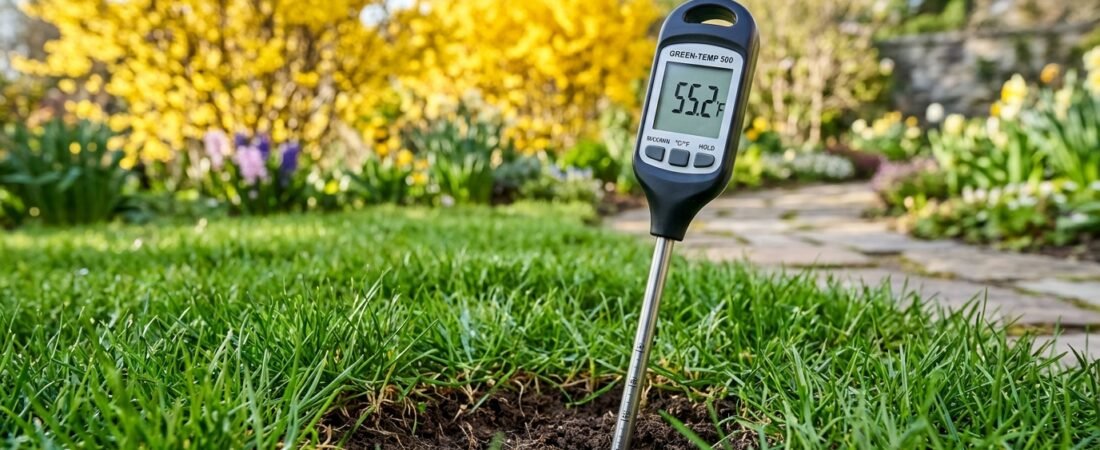
The golden rule of spring weed prevention: Pre-emergent must be applied and watered into the soil before dirt temperatures at a 4-inch depth hit 55°F for three consecutive days. Target your application when morning soil temperatures read between 50°F and 52°F. Applying after you see visible crabgrass or dandelions is too late—pre-emergents halt seed cell division, but cannot kill established root systems.
Every spring, thousands of homeowners waste hundreds of dollars on weed-and-feed bags because they time their applications by the calendar instead of the thermometer. The yellow flowers on a neighbor’s forsythia bush might offer a rustic garden hint, but relying on visual cues alone leads to either applying too early—causing the chemical barrier to degrade before seeds stir—or applying too late, when crabgrass sprouts have already anchored below the surface.
How Pre-Emergents Actually Work: The Underground Shield
A pre-emergent herbicide does not prevent weed seeds from germinating. Instead, as the seed absorbs moisture and sends out its initial root radical (the seedling root), it encounters a thin, chemical-treated layer of topsoil. Active ingredients like Prodiamine or Dithiopyr disrupt microtubule assembly during plant cell mitosis. The young root tip cannot divide, cellular growth halts abruptly, and the seedling collapses before ever breaking through the turf canopy.
Because this barrier sits strictly in the upper 0.5 to 1.5 inches of your root zone, precision timing and proper incorporation determine 100% of your seasonal success. If the chemical remains stranded on grass blades due to lack of water, sunlight photodegradation cuts its active lifespan by half within a week.
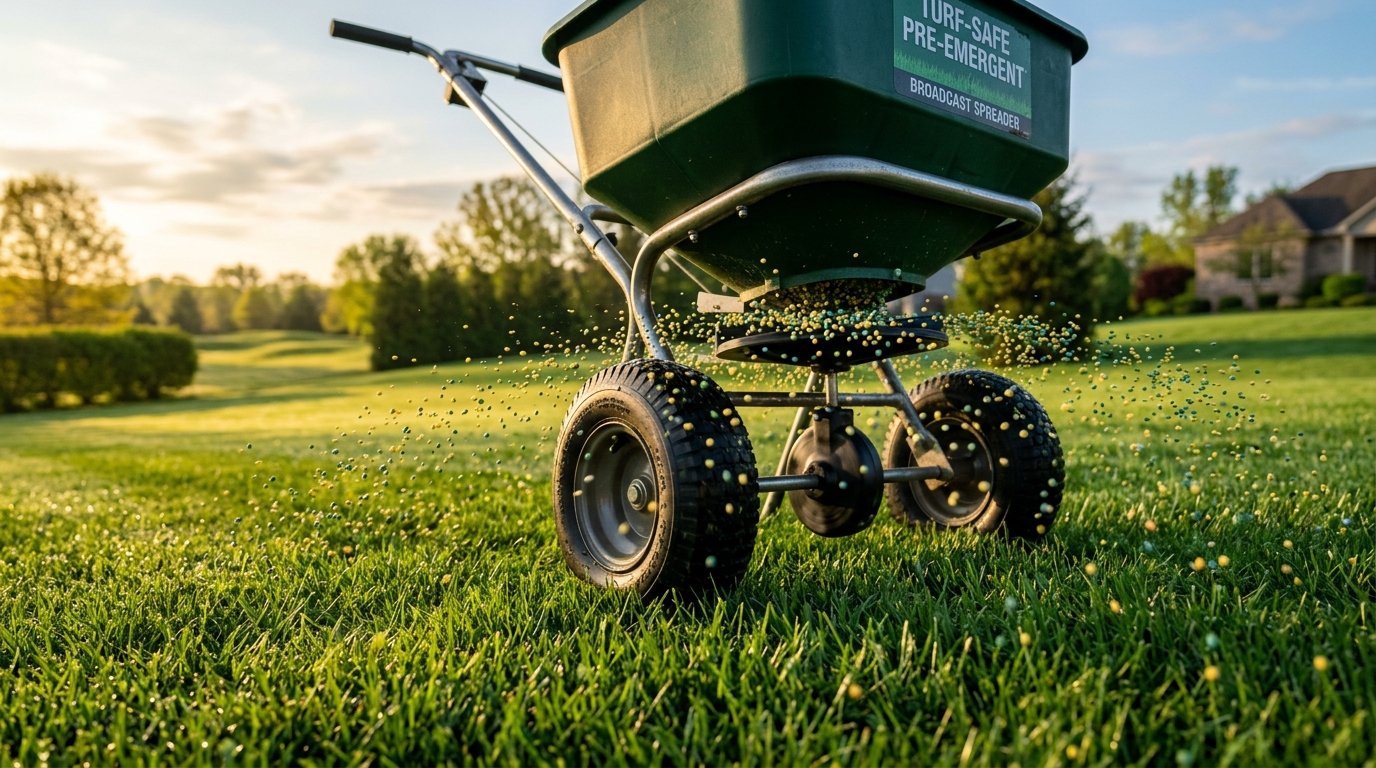
Calibrating your broadcast spreader ensures an uninterrupted chemical barrier across your entire lawn without hot spots.
Active Ingredients Comparison: Choosing Your Weapon
Not all pre-emergents are created equal. Depending on your grass type, seasonal budget, and whether crabgrass has already begun emerging in sunny microsites, you will want to select an active chemical engineered for your specific scenario:
The Split-Application Strategy: Why One Heavy Dose Fails
In high-rainfall transition zones, single heavy applications frequently leach past the active germination zone by early summer, leaving your yard unprotected during the peak heat waves of July and August when spurge, goosegrass, and foxtail emerge.
To ensure season-long weed lockdown, the Good Neighbor Crew split-application method yields near-100% suppression:
- Application 1 (Late Winter / Early Spring): When soil temps reach 50°F-52°F, lay down 50% to 60% of the maximum annual rate (e.g., 0.4 oz Prodiamine 65 WDG per 1,000 sq ft). This catches early crabgrass and chickweed germination.
- Application 2 (6 to 8 Weeks Later): When soil temperatures approach 65°F-70°F (typically late April to mid-May), apply the remaining 40% to 50% dose. This resets the chemical shield to combat warm-weather summer weeds like spurge and crabgrass second-flushes.
Pro Contractor Tip: Don’t Rake or Aerate After Application
Core aeration, aggressive dethatching, or heavy dog digging will mechanically puncture your pre-emergent barrier. Always complete core aeration and heavy cleanups before applying your pre-emergent, or wait until autumn lawn renovation season.
Frequently Asked Questions
At what soil temperature should I apply pre-emergent herbicide?
Apply spring pre-emergent when soil temperatures at a 4-inch depth consistently reach 50°F to 55°F for 3 to 5 consecutive mornings. Crabgrass seeds begin germination when 24-hour average soil temperatures cross 55°F.
Should I apply pre-emergent before or after rain?
Apply pre-emergent right BEFORE a gentle, soaking rain of 0.25 to 0.5 inches, or irrigate your lawn within 48 hours of application. Moisture is required to dissolve the granules and activate the chemical barrier in the top 1 to 2 inches of soil.
Can I overseed grass seed and apply pre-emergent at the same time?
Standard pre-emergents like Prodiamine and Dithiopyr inhibit all newly germinating seeds, including desirable turfgrass. If you plan to seed in spring, you must use Mesotrione (Tenacity), which is safe for Kentucky bluegrass, perennial ryegrass, and tall fescue at seeding. Follow our detailed spring lawn overseeding timing and seed rate guide to ensure zero herbicide conflict.
Need Help Timing Your Yard Care This Season?
Join thousands of homeowners sharing real-time soil thermometer readings, seasonal mowing schedules, and weed-free lawn photos across our neighborhood community.
Related Seasonal Lawn Restoration Guides:
- Target breakthrough weeds: How to Kill Crabgrass Without Damaging Turf
- Winter protection: Winter Lawn Care Checklist Before First Hard Frost
- Lawn breathing & dethatching: Dethatching vs Aerating: Which Does Your Turf Need?
Know a Neighbor Who Needs a Helping Hand?
Good Neighbor Crew is dedicated to providing 100% free lawn mowing, edging, and yard restoration for elderly seniors, disabled veterans, and struggling single parents. We never charge a dime—this is our grassroots way of keeping neighborhoods dignified and safe.