

7 things to do before the first frost: (1) Lower mowing height to 2 to 2.5 inches, (2) Apply high-potassium winterizer fertiliser 2 to 4 weeks before freeze, (3) Core aerate compacted lawn zones, (4) Remove all leaf accumulation, (5) Blow out irrigation systems with compressed air, (6) Apply preventative fungicide if disease history exists, and (7) Mark lawn edges and driveway borders before snowfall. These steps protect grass roots during freeze-thaw cycles and guarantee faster spring green-up.
The window between the last green days of autumn and the first killing frost is one of the most critical — and most overlooked — periods of the lawn care calendar. What you do (or fail to do) in this narrow window directly determines whether your lawn recovers green and thick in April or struggles through spring bare patches, fungal damage, and weak rooting.
This checklist covers every essential pre-frost step in the correct sequence, with the specific timing, product types, and techniques that turf professionals use to send their clients’ lawns into dormancy in peak condition.
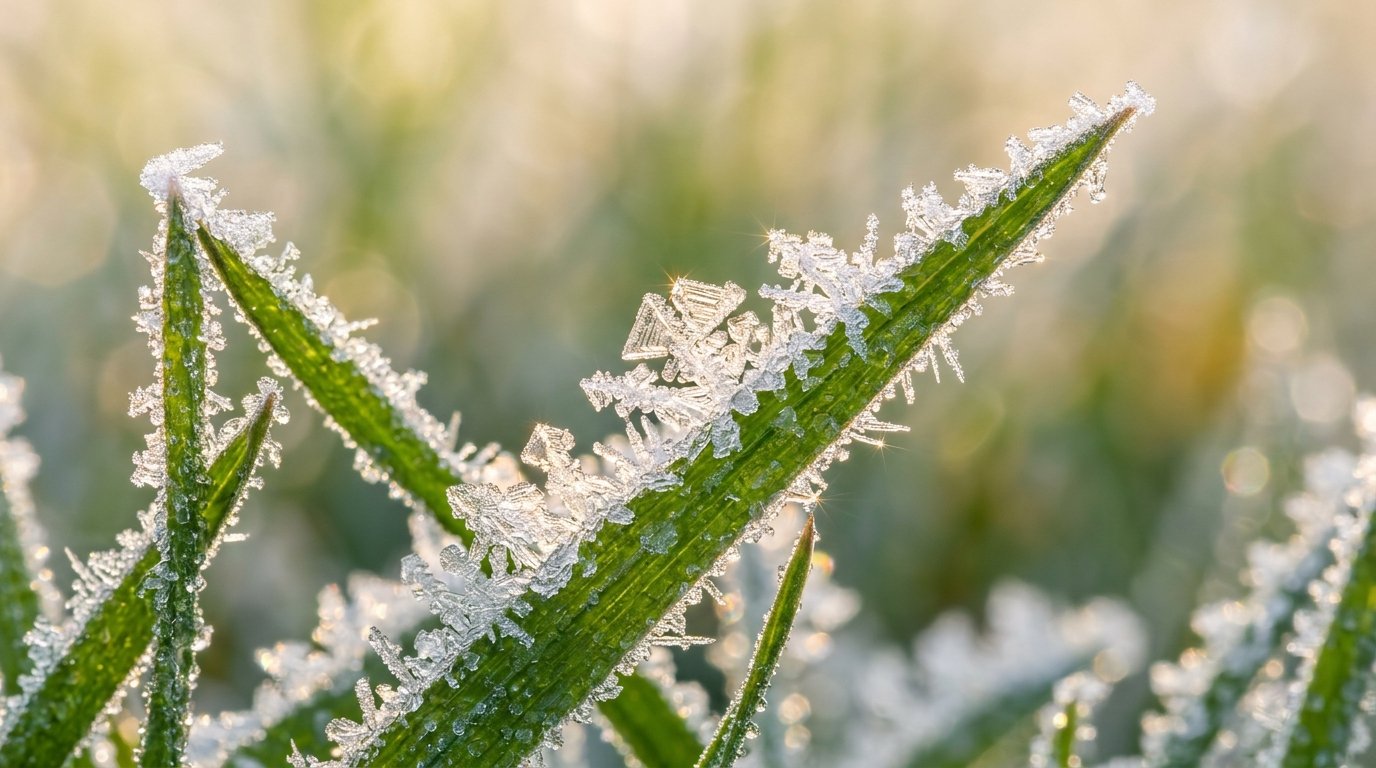
Step 1: Lower Your Final Mowing Height
Your lawn’s final cut before dormancy should bring cool-season grasses down to 2 to 2.5 inches — lower than your usual summer height of 3 to 4 inches. This is not an arbitrary aesthetic choice; it has direct disease prevention logic.
Grass that enters winter at 4 or 5 inches tall becomes matted and compressed under the weight of snow and ice, creating a dense, airless microclimate between the soil and the snow surface. This warm, wet, oxygen-deprived environment is precisely where grey snow mold (Typhula blight) colonises grass blades and kills turf crowns over winter.
Pro Tip: If you have warm-season grass (Bermuda, Zoysia, St. Augustine), do NOT lower the mowing height before winter. These grasses need their leaf canopy to protect shallow roots from frost.
Step 2: Apply Winterizer Fertiliser (The Most Important Step)
Winterizer fertiliser is specifically formulated to prepare grass for dormancy. Unlike spring and summer lawn feeds that are high in nitrogen to push leaf growth, winterizers are high in potassium (K) and moderate in phosphorus (P), with minimal nitrogen (N).
Potassium is the key mineral: it regulates cell membrane permeability and helps grass cells manage the osmotic stress of freeze-thaw cycles. Lawns that enter dormancy with adequate potassium reserves experience dramatically less winter kill and green up 2 to 4 weeks earlier in spring.
Timing: Apply winterizer fertiliser 2 to 4 weeks before the ground typically freezes in your region (soil temperature 50°F / 10°C or below). Too early and the nitrogen fraction still stimulates soft growth vulnerable to frost. Too late and frozen ground prevents nutrient absorption.
Step 3: Core Aerate Any Remaining Compacted Areas
If you did not aerate in early autumn, do it now before the ground freezes. Even a late October aeration pass over heavily compacted zones (play areas, paths, dog runs) will open channels for winter moisture management and early spring root expansion.
Aerated lawns survive freeze-thaw cycles with less heaving damage because the open core channels allow expanding ice to escape upward rather than fracturing dense soil laterally, which lifts grass crowns out of the ground in a process called frost heave.
Step 4: Remove All Leaf Accumulation (Do Not Wait)
Fallen leaves seem harmless in autumn sunshine, but once the rains begin and temperatures drop, they form a dense, wet mat across your turf canopy. Leaf mats:
- Block sunlight reaching existing grass blades
- Prevent air circulation at the soil surface
- Trap moisture against grass crowns (the primary snow mold trigger)
- Create ideal overwintering habitat for grubs, chinch bugs, and voles
Thin leaf layers (a single oak leaf per square foot) can be mulched in place with a mulching blade — the shredded material feeds soil microbes. Heavy accumulations must be raked or blown into compost piles.
Step 5: Blow Out Your Irrigation System
Any water remaining inside underground irrigation pipes when temperatures drop below 28°F (-2°C) will expand as it freezes, cracking pipe joints, manifolds, and backflow preventers. A single irrigation blow-out using a commercial compressor (45 to 50 CFM capacity) prevents hundreds or thousands of dollars in spring repair bills.
DIY or professional? Hire a professional for systems with more than 6 zones. The process requires compressor pressure calibration by zone (rotor heads: 50 psi max; spray heads: 30 psi max) to avoid blowing out valve diaphragms.
Step 6: Address Existing Lawn Disease Before Freeze
If you noticed red thread, dollar spot, or brown patch during the growing season, autumn is your last window to apply a preventative systemic fungicide before dormancy locks those fungal spores into the soil for winter. Products containing azoxystrobin or thiophanate-methyl applied in mid-autumn have shown consistent efficacy in university extension trials for reducing spring snow mold infection rates.
Step 7: Mark Your Driveway Edges and Lawn Borders
Once snow covers your landscape, the visible boundary between your driveway and lawn disappears. Snow ploughs, snowblowers, and even shovels routinely damage lawn edges by peeling off turf chunks and damaging grass crowns in border zones. Install bright orange or yellow fibreglass driveway stakes 6 inches inside the actual lawn edge — far enough that the blade of a plough never reaches the turf.
We Help Neighbours Winterize Their Lawns — Free of Charge
At Good Neighbor Crew, our volunteer teams assist senior homeowners and military families with seasonal yard prep — including leaf removal, final mowing, and winterizer applications. Check out our community stories and nominate a neighbour for free lawn care.
Frequently Asked Questions
Should I fertilise my lawn before the first frost?
Yes. Applying a winterizer fertiliser (high in potassium and phosphorus, low in nitrogen) 2 to 4 weeks before the ground freezes is one of the most important things you can do for your lawn. It strengthens grass cell walls against freeze-thaw cycles and loads root systems with energy reserves that fuel rapid spring green-up. Never apply high-nitrogen fertiliser in late autumn as it stimulates soft leaf growth vulnerable to frost burn.
What is the best final mowing height before winter?
For cool-season grasses (Kentucky Bluegrass, Tall Fescue, Perennial Ryegrass), lower your final cut of the season to 2 to 2.5 inches. Grass that is too tall going into winter becomes matted under snow, creating ideal conditions for snow mold fungal disease. Grass cut too short loses its protective insulating canopy over roots during hard frosts.
Should I leave leaves on my lawn over winter?
No. A thick layer of wet, matted leaves over your lawn through winter blocks sunlight and air circulation, creating conditions for grey snow mold and pink snow mold. These fungal diseases can destroy entire lawn sections that are invisible until spring. Mulch thin layers of dry leaves with your mower, but physically remove heavy accumulations before the first hard frost.
Related Seasonal Lawn Restoration Guides:
- Fall soil preparation: Core Aeration vs Liquid Aeration Complete Guide
- Spring barrier setup: Spring Pre-Emergent Timing & 55°F Soil Temperature Rules
- Lawn thickening: How to Overseed a Thin Yard for Thick Spring Turf
Know a Neighbor Who Needs a Helping Hand?
Good Neighbor Crew is dedicated to providing 100% free lawn mowing, edging, and yard restoration for elderly seniors, disabled veterans, and struggling single parents. We never charge a dime—this is our grassroots way of keeping neighborhoods dignified and safe.