
While you technically can mow wet grass with a push mower, you should avoid it whenever possible. Cutting damp or wet turf tears rather than slices grass blades, spreads fungal spores across your yard, compacts saturated topsoil leaving ugly wheel ruts, and clumps wet grass clippings that suffocate the living turf beneath.
If rainy forecasts leave you with no choice, you can minimize damage by following 5 essential rules: raise your mower deck by 1 to 1.5 inches, use a freshly sharpened blade, side-discharge clippings instead of mulching, walk at half-speed, and scrape your mower deck immediately after mowing before wet grass cures like concrete.
At-a-Glance: Mowing Dry Grass vs. Wet Grass
| Factor | Mowing Dry Grass | Mowing Wet Grass | Turf Health Impact |
|---|---|---|---|
| Cut Quality | Clean, crisp slice | Torn, frayed blade tips | Shredded tips turn brown and invite fungal leaf spot. |
| Clipping Distribution | Fine mist; mulches cleanly | Heavy, wet clump clusters | Clumps block sunlight and kill grass within 48 hours. |
| Soil Compaction | Minimal | Severe wheel ruts & compaction | Squeezes oxygen out of root zones; creates muddy tire ruts. |
| Mower Strain | Normal engine RPM | High drag; bogging & stalling | Can slip drive belts, stall small engines, or rust decks. |
5 Rules if You Must Mow Wet Grass
1. Raise the Cutting Height by at Least 1 Inch
When grass is wet, individual blades bend under the weight of water droplets. If you try to cut at your normal 2.5-inch or 3-inch setting, your mower blade will scalp the turf unevenly. Raise your wheel height levers by one or two notches. You can always mow it down to standard height a few days later once the sun dries the lawn.
2. Never Mulch Wet Grass (Side-Discharge or Bag Instead)
Mulching blades work by swirling grass clippings inside the deck chamber multiple times to chop them finely. When clippings are soaked with water, they stick to the curved underbelly of the mower deck, accumulating into a thick, sodden green paste that chokes engine airflow. Switch to side-discharge, or use a collection bag and empty it frequently (wet grass is 3x heavier than dry grass).
3. Sharpen Your Lawnmower Blade
A dull mower blade is forgiving on dry, upright grass. On limp, wet grass, a dull blade acts like a blunt baseball bat, tearing and fraying the grass stalk rather than slicing it cleanly. Frayed grass tips lose moisture rapidly, turn bleached-white or straw-brown within 24 hours, and create open wounds where fungal spores enter.
Master Your Yard Care Equipment & Techniques
Save hundreds of dollars in lawn equipment repairs and bad mowing habits. Our best-selling handbook “Good Lawns Don’t Happen by Accident” teaches you how to maintain your mower, master mowing heights, and achieve golf-course curb appeal.
4. Safety Warning for Electric & Battery Mowers
If you use an electric corded lawnmower, never mow in damp conditions. Extension cords, plug connections, and wet grass present a real risk of electric shock. While cordless battery-powered mowers are generally safe from electrical shock, wet grass places immense rotational drag on electric brushless motors, causing battery packs to overheat and drain in half their normal runtime.
5. Scrape the Mower Deck Immediately After Finishing
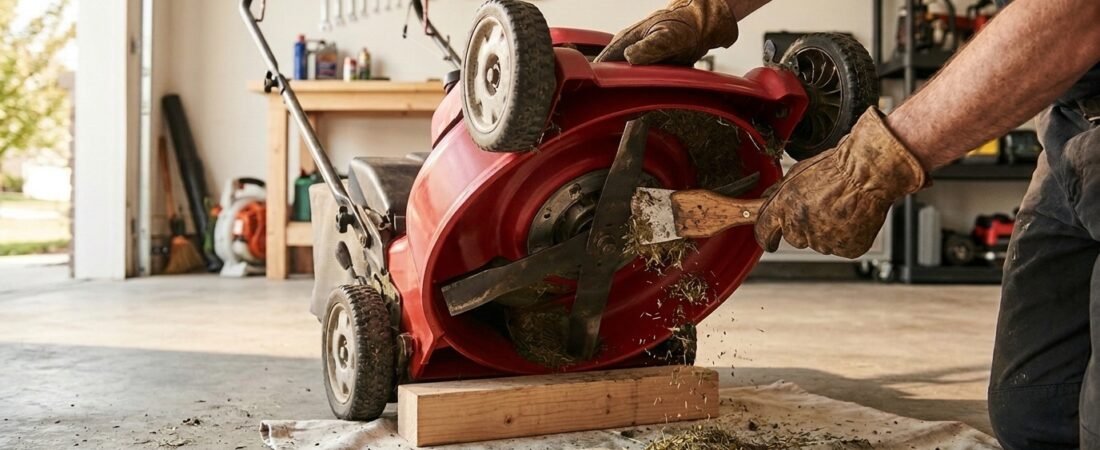
Once you finish mowing wet grass, do not simply park the mower back in the shed or garage. Wet grass contains natural acids and moisture that will rapidly corrode and rust steel cutting decks. Disconnect the spark plug boot (for safety), tip the mower up with the air filter pointing upward (to prevent oil leaking into the carburetor), and use a plastic putty knife to scrape away all wet buildup.
Frequently Asked Questions (FAQ)
How long should I wait to mow grass after heavy rain?
Under normal sunny conditions, wait 2 to 5 hours after rain stops. Test by walking onto your lawn: if your shoe soles sink into muddy soil or kick up water droplets, wait longer. If your shoes stay dry and soil feels firm underfoot, you can safely mow.
Why does my lawn have brown clumps after mowing wet grass?
Wet grass sticks together into dense clumps instead of dispersing evenly. These heavy clumps act like a solid tarp, blocking sunlight and air from the turf beneath. Within 48 hours, the covered grass turns yellow-brown and dies. Always rake or scatter clumps with a leaf blower immediately after cutting.
Can mowing wet grass damage my lawn mower engine?
Yes. Wet grass creates excessive resistance against blade rotation, forcing the engine governor to run wide open. In small push mowers (140cc–160cc), this extra friction can overheat the engine, slip or snap drive belts, and bend crankshafts if the blade strikes a dense mud clump.