
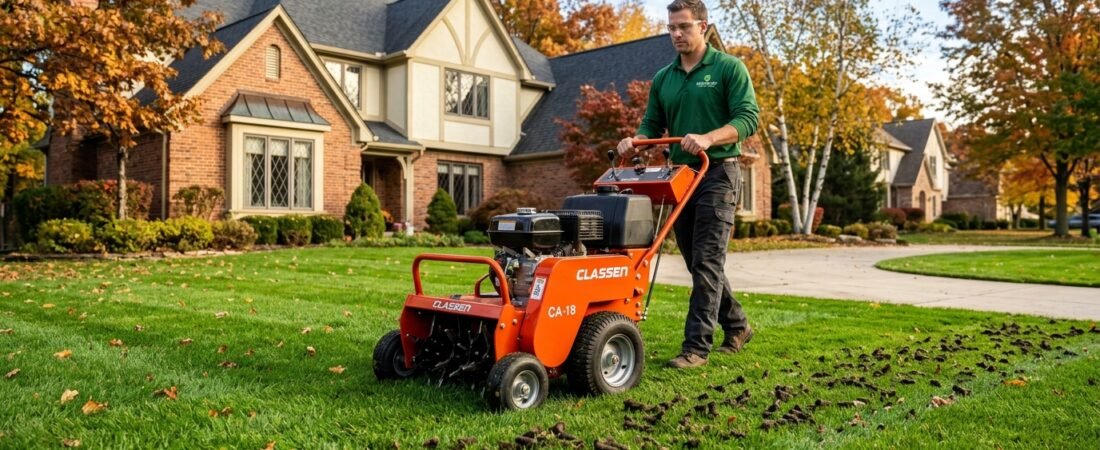
The Bottom-Line Verdict: Mechanical core aeration remains the undisputed gold standard for immediately relieving severe physical soil compaction in heavy clay lawns, creating 2.5 to 3.5-inch open vertical pathways that immediately admit oxygen, water, and overseeded grass seeds. Liquid aeration (composed of humic acids, potassium humate, and soap-like surfactant soil penetrants) works chemically by creating microscopic fracture pores over several months, but cannot physically remove thatch or provide seed-to-soil contact channels. For maximum turf vitality on compacted suburban lawns, the ultimate strategy is a hybrid protocol: mechanical hollow-tine core aeration in early autumn followed immediately by a bio-stimulant humic drench.
Every healthy, emerald-green lawn begins deep beneath the surface. Yet most suburban homeowners spend hundreds of dollars on premium fertilizers, weed killers, and sprinkler cycles without realizing their turf roots are literally suffocating inside concrete-like, compacted soil.
When heavy clay soil becomes compacted from foot traffic, lawn mowers, and natural seasonal settling, the microscopic pore space between soil particles collapses. Rainwater sheets off in surface puddles, fertilizer runs down the gutter, and grass roots remain stunted in the top two inches.
To fix this, homeowners face a hotly debated choice: heavy mechanical core aeration (renting or hiring a 200-pound motorized hollow-tine machine) versus liquid aeration (spraying a hose-end surfactant and humic acid concentrate). Here is the unvarnished horticultural science comparing both methods, when each makes sense, and how to decompact your lawn once and for all.
1. Mechanical Core Aeration: The Physical Decompaction King
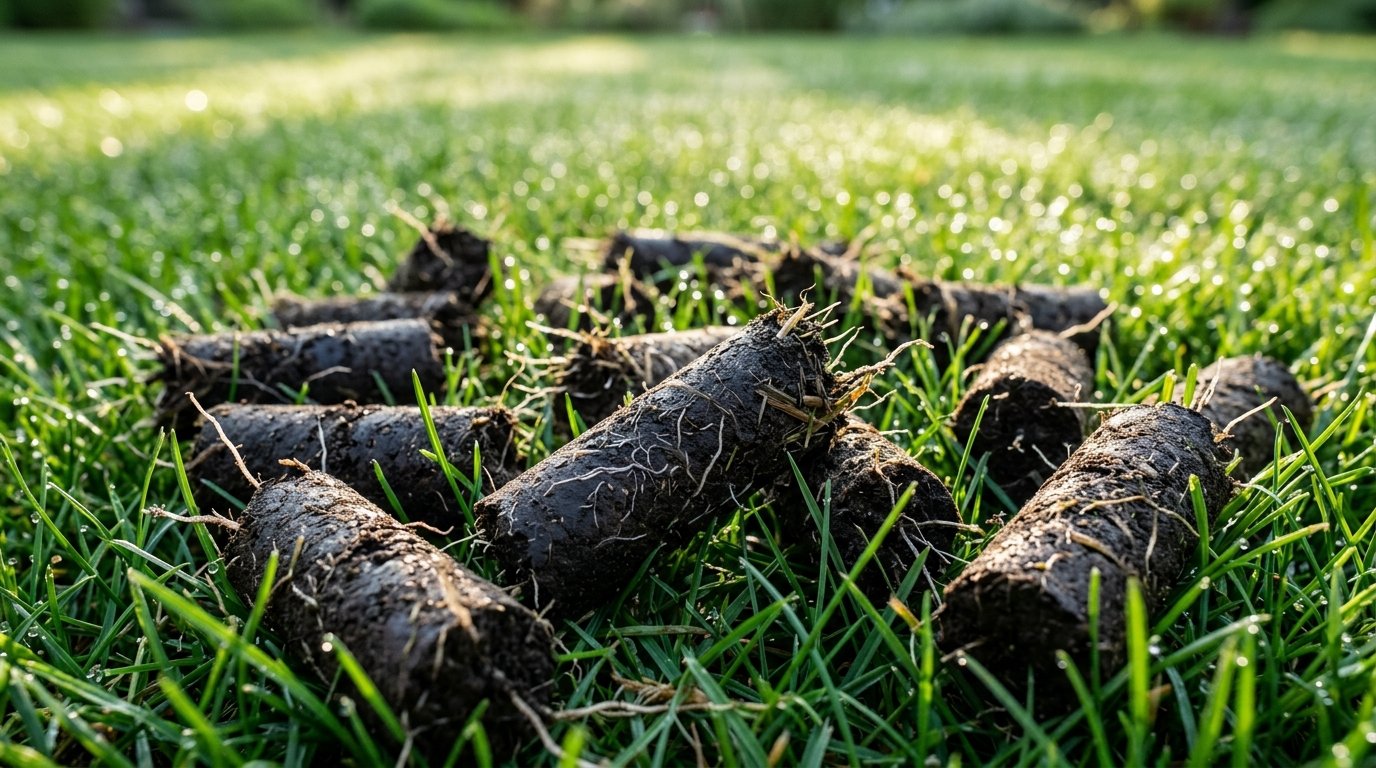
Mechanical core aeration operates using hollow metal spoons or cylindrical tines driven into the turf by mechanical weight. As the machine traverses your lawn, it extracts thousands of cylindrical soil plugs (measuring roughly 0.5 to 0.75 inches in diameter and 2.5 to 3.5 inches in depth), depositing them across the surface.
The primary agronomic benefits of pulling physical cores include:
- Immediate Pressure Relief: By physically removing 5% to 10% of the soil volume, surrounding soil particles can expand laterally, immediately dropping soil bulk density.
- Thatch Layer Puncture: Dense thatch layers exceeding 0.5 inches act as a hydrophobic sponge. Tines physically cut through this thatch barrier, allowing moisture directly into the root zone.
- Perfect Seed-to-Soil Contact for Overseeding: The thousands of open holes act as natural seed incubators, protecting tender grass seeds from birds and scorching sun while locking in moisture.
- Microbial Inoculation: As the extracted soil plugs break down over 2 to 3 weeks under rain and mowing, they filter beneficial soil microbes back over the thatch layer, digesting organic debris naturally.
2. Core Aeration vs. Liquid Aeration: Direct Technical Comparison
3. How Liquid Aeration Actually Works (The Chemistry)
Marketing claims for liquid aeration often sound too good to be true: “Spray your lawn in 15 minutes with no heavy machine!” While liquid aeration cannot physically extract clay, legitimate commercial formulations rely on real soil chemistry:
1. Non-Ionic Surfactants (Soil Penetrants): High-grade surfactants break the surface tension of water. On hydrophobic, sun-baked clay soils, normal irrigation beads up and runs off. Surfactants allow water molecules to penetrate tightly bound clay platelets rather than repelling away.
2. Potassium Humate & Humic Acids: Humic substances act as soil flocculants. They bind to tiny microscopic clay particles, aggregating them into larger, crumb-like clusters (soil crumbs). This microscopic flocculation creates tiny pore spaces where air and water can circulate.
When Liquid Aeration Shines: If your yard features exposed tree roots, buried shallow landscape lighting cables, invisible irrigation pipes, or steep rocky terraces where a 250-pound core machine would roll or break tines, liquid aeration provides a safe, gradual soil conditioner.
4. Seasonal Timing: When to Aerate Your Lawn
Aerating at the wrong time of year will stress your grass and trigger explosive weed seed germination. Always align aeration with the active growth cycle of your specific turf species:
- Cool-Season Grasses (Kentucky Bluegrass, Tall Fescue, Perennial Ryegrass): Aerate in Late Summer to Early Autumn (September to October). Soil temperatures are warm, air temperatures are cool, and annual summer weeds like crabgrass are dying off. Follow with overseeding and starter fertilizer. If renovating bare patches or thinning turf in spring instead, follow our spring lawn overseeding guide to ensure proper seed-to-soil contact before summer heat sets in.
- Warm-Season Grasses (Bermuda, Zoysia, St. Augustine): Aerate in Late Spring to Early Summer (May to June). Warm-season grasses must be fully green and actively growing so they can rapidly spread into the core holes.
Transforming Neighborhoods One Lawn at a Time
At Good Neighbor Crew, we provide volunteer yard restoration, senior assistance, and practical turf education across local communities. Check out our latest project videos and community cleanup stories.
Frequently Asked Questions (FAQ)
Should I clean up the soil cores after aerating?
No. Leave the extracted soil plugs on your lawn. Over the next 1 to 2 weeks, rain, dew, and routine lawn mowing will break down the plugs, redistributing nutrient-rich topsoil and beneficial microorganisms across the turf canopy.
Can I aerate when the ground is completely dry?
Never aerate bone-dry clay soil. Dry clay acts like solid concrete, causing the aerator tines to bounce on the surface and penetrate only a fraction of an inch. Water your lawn thoroughly 24 to 48 hours prior to aerating so the tines can pull deep, clean 3-inch plugs.
How often should a residential lawn be core aerated?
Lawns with heavy clay soils, active children, or pets should be aerated once every year in autumn. Sandy, low-traffic lawns can be aerated once every two to three years.
Related Seasonal Lawn Restoration Guides:
- Compare methods: Dethatching vs Aerating Lawn Comparison
- Seed post-aeration: Overseeding Immediately After Core Aeration
- Weed management: Post-Emergent Weed Control Best Practices
Know a Neighbor Who Needs a Helping Hand?
Good Neighbor Crew is dedicated to providing 100% free lawn mowing, edging, and yard restoration for elderly seniors, disabled veterans, and struggling single parents. We never charge a dime—this is our grassroots way of keeping neighborhoods dignified and safe.