
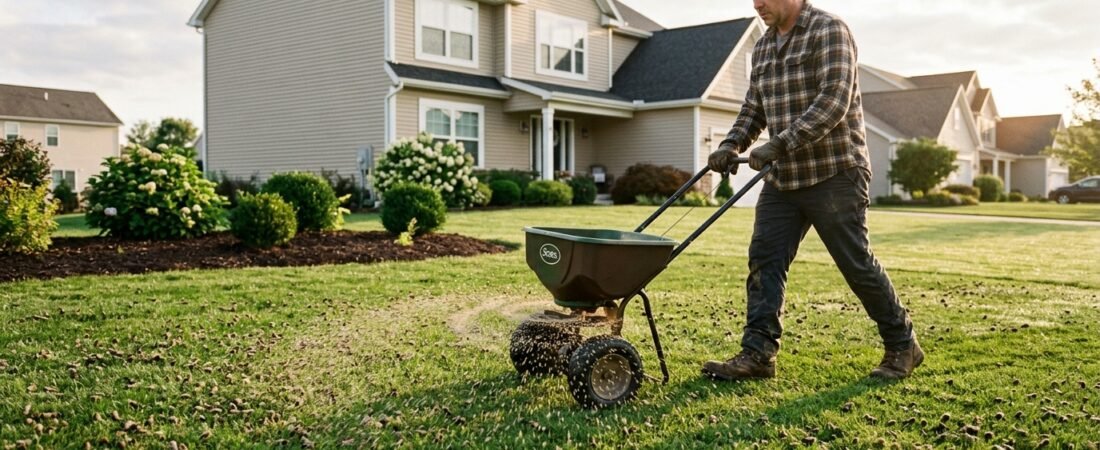
Direct Answer / Core Protocol: To successfully overseed a thin lawn, first mow the existing grass short (1.5–2.0 inches) and perform core aeration or dethatching to expose raw soil. Broadcast quality seed at 3–4 lbs per 1,000 sq ft for fescue blends (or 1.5–2 lbs for bluegrass), apply a high-phosphorus starter fertilizer, and water lightly 2–3 times daily for 5–10 minutes to maintain constant seedbed moisture until germination (7–21 days).
Every summer takes a heavy toll on residential turf. Between baking heat waves, summer foot traffic, pet wear, and seasonal drought stress, even the healthiest lawns begin to show thinning patches, faded color, and invasive broadleaf weed infiltration by late August.
The single most cost-effective and biologically sound method to restore thick, carpet-like emerald turf is overseeding—the practice of introducing resilient modern grass cultivars directly into existing turf without tearing up your lawn. As we discussed in our guide to dethatching vs aerating your lawn and our playbook on how to repair bare spots fast, seed requires direct soil contact and meticulous moisture management to survive.
In this comprehensive 2026 homeowner guide, the Good Neighbor Crew field team details seed rate formulas, mechanical preparation protocols, starter fertilizer chemistry, and our proven 21-day watering cadence.
Why Overseeding Is Mandatory: Turf Aging & Genetic Upgrades
Individual grass plants naturally age, lose reproductive vigor, and thin out after 4 to 6 years of mowing cycles. Without annual or biennial overseeding:
- Weeds Fill the Vacuums: Crabgrass, dandelions, and clover only germinate where sunlight hits exposed bare earth. A dense turf canopy is nature’s most effective pre-emergent herbicide.
- Disease Resistance Declines: Modern turfgrass breeding has developed drought-tolerant, endophyte-enhanced fescues and ryegrasses that naturally repel chinch bugs and surface-feeding insects while resisting brown patch and summer dollar spot.
- Heat & Wear Resilience: Introducing improved turf-type tall fescue (TTTF) varieties deepens your lawn’s root architecture, helping it stay green through intense summer heat with up to 30% less irrigation.
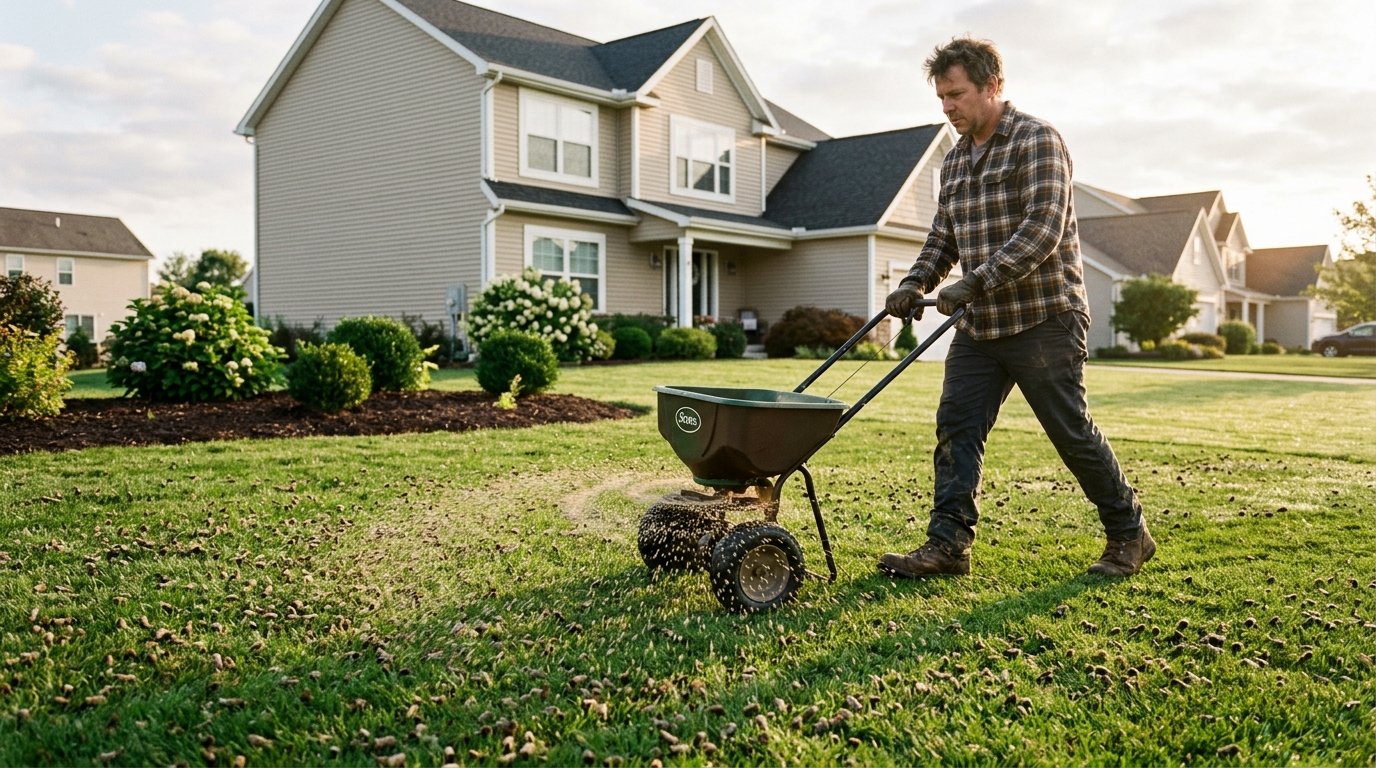
Broadcasting premium turf seed across an aerated lawn ensures seeds drop directly into open soil cores.
The Timing Window: Late Summer / Early Autumn vs. Spring
For cool-season grasses across North America and temperate regions, the calendar window you select dictates over 80% of your germination success:
Autumn (Late August – September): The Gold Standard
Soil temperatures remain warm (55°F–65°F), triggering rapid enzymatic seed germination. Meanwhile, cool night air reduces heat evaporation, weed pressure drops dramatically as summer annuals die off, and autumn rains provide natural hydration. New root systems develop undisturbed through winter.
Spring (March – April): The Secondary Window
Acceptable if severe winter damage occurred, but challenging: cold spring soil slows germination, crabgrass and broadleaf seeds compete vigorously for space, and standard pre-emergent weed barriers cannot be applied without also sterilizing your grass seed.
Preparation: The Golden Rule of Seed-to-Soil Contact
A grass seed that rests on top of dead thatch or living grass blades has a less than 15% chance of survival. To achieve over 85% germination, follow this 4-step preparation sequence:
- Scalp the Turf: 2 days before seeding, lower your mower deck to 1.5 to 2.0 inches. Bag all clippings. Short turf allows sunlight to penetrate the canopy down to the emerging seedlings and slows existing grass growth so it doesn’t shade out new grass.
- Mechanical Aeration: Run a commercial core aerator across the lawn in two perpendicular directions. The 2-to-3-inch hollow tines pull out thousands of soil cores, providing micro-incubators where seed falls, settles, and receives subsurface moisture.
- De-thatch Heavily if Needed: If your thatch layer exceeds 0.5 inches, use a power rake to pull up the brown spongy mat before aerating.
- Light Topdressing: In thin or bare patches, rake a thin 1/8-inch dusting of screened compost or fine peat moss to shield seeds from drying winds and hungry birds.
Comparison: Overseeding Methods & Equipment
Choosing the right distribution tool depends on lawn size, budget, and severity of turf thinning:
| Equipment Type | Best Use Case | Soil Contact Rating | Est. DIY Difficulty |
|---|---|---|---|
| Rotary Broadcast Spreader | General overseeding across entire residential lawns | High (when combined with core aeration) | Low (Easy homeowner push tool) |
| Slit Seeder (Verticutter) | Extremely thin or damaged lawns with zero core aeration | Maximum (Cuts grooves directly into earth) | High (Heavy rental machinery) |
| Drop Spreader | Small urban lots, edges, and precise boundary borders | Moderate (Requires post-seeding raking) | Low (Requires overlapping passes) |
| Hand-Rake & Broadcast | Small dog spots, localized burnout patches, and tree bases | High (Manual scratch-in with metal bow rake) | Very Low (Manual labor) |
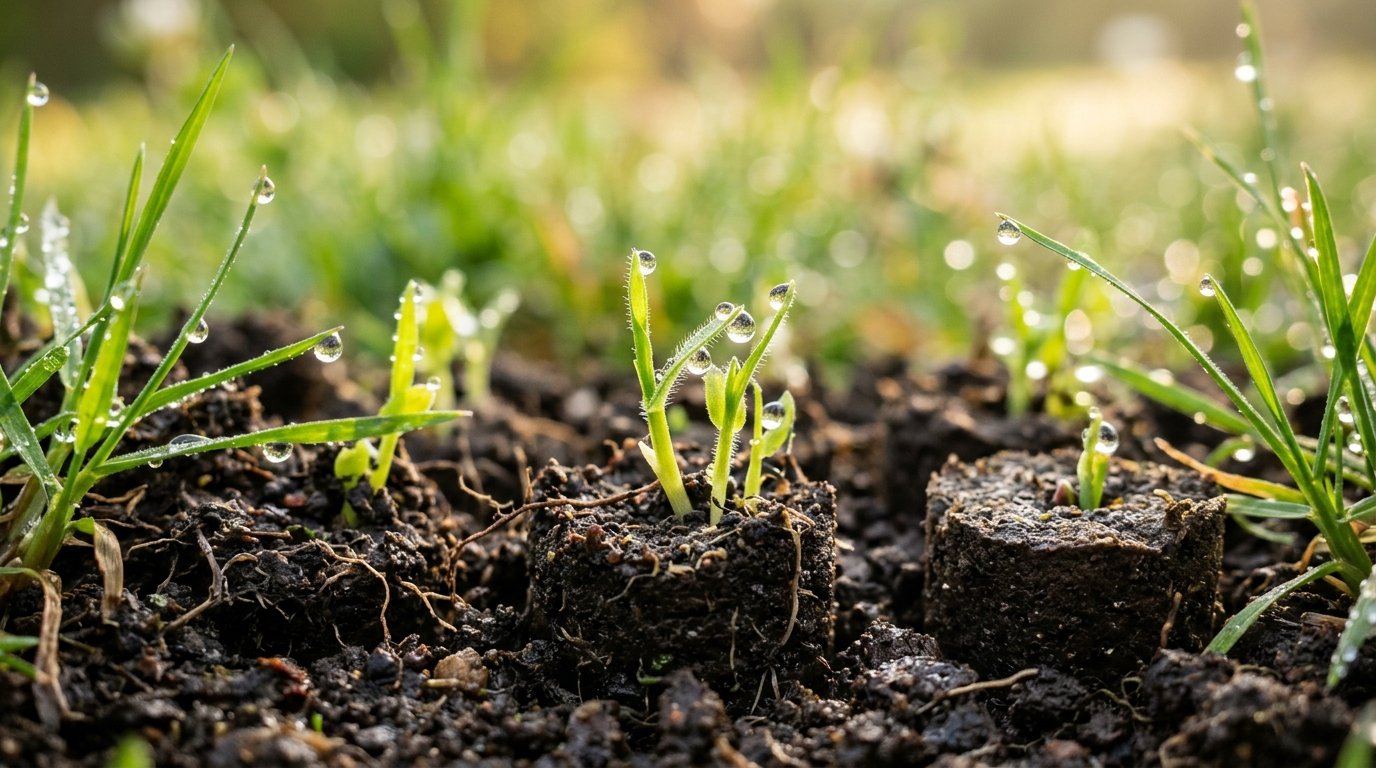
Within 7 to 10 days of consistent watering, young grass seedlings emerge from dark core plugs.
The 21-Day Germination Watering Cadence
Watering is where 90% of DIY lawn renovations succeed or fail. A sprouted seed that dries out for even 4 hours will shrivel and permanently die. Follow this 3-phase watering schedule:
- Days 1 to 14 (Sprout Phase): Water 2 to 3 times daily for 6 to 10 minutes per zone (7:00 AM, 12:30 PM, and 4:30 PM). Keep the top 0.5 inches of soil dark and damp. Never create puddles or runoff that floats seeds away.
- Days 15 to 21 (Root Anchor Phase): Reduce frequency to once daily for 15 to 20 minutes in early morning. This encourages delicate young roots to push deeper into the subsoil in search of moisture.
- Day 22+ (Establishment Phase): Transition to standard deep-and-infrequent turf watering: 2 to 3 times per week delivering 1 to 1.5 inches total of irrigation per week.
Starter Fertilizer: Fueling Early Root Expansion
Standard lawn fertilizers contain high nitrogen (the first number on the bag) designed to stimulate rapid top-growth. For overseeding, you need a specialized Starter Fertilizer rich in Phosphorus (the middle number, e.g., 18-24-12 or 10-18-10). Phosphorus stimulates immediate lateral root division and cell elongation, locking young seedlings into the earth before cold autumn frost arrives.
Want Professional Lawn Renovation Without the Guesswork?
The Good Neighbor Crew team provides commercial-grade double-pass core aeration, certified blue-tag seed broadcasting, and customized starter treatments across our local communities.
Frequently Asked Questions About Overseeding
Can you put weed killer down when overseeding?
No. Standard pre-emergent weed barriers (prodiamine, dithiopyr) create a chemical vapor barrier that blocks seed root development for 3 to 6 months. Only specialized starter fertilizers with Mesotrione (Tenacity) can safely target broadleaf weeds while allowing newly seeded grass to germinate unharmed.
When can you mow the lawn after overseeding?
Wait until the new grass seedlings reach at least 3.0 to 3.5 inches in height (typically 3 to 4 weeks after seeding). Ensure mower blades are razor-sharp to slice cleanly without tearing the tender, shallow roots out of the ground, and only cut when turf is completely dry.
Should you cover overseeded grass seed with straw?
For general overseeding into existing turf, straw is unnecessary because the existing grass canopy shields seed from wind and sun. Furthermore, cheap agricultural straw often contains dormant weed seeds that infest your lawn. For localized bare patches, use clean peat moss or sterilized weed-free seed blankets instead.
Related Seasonal Lawn Restoration Guides:
- Prepare the seedbed: Core Aeration Before Overseeding
- Thatch removal: Dethatching vs Aerating Before Spreading Seed
- Prevent competing weeds: Pre-Emergent Timing When Seeding Your Lawn
Know a Neighbor Who Needs a Helping Hand?
Good Neighbor Crew is dedicated to providing 100% free lawn mowing, edging, and yard restoration for elderly seniors, disabled veterans, and struggling single parents. We never charge a dime—this is our grassroots way of keeping neighborhoods dignified and safe.