
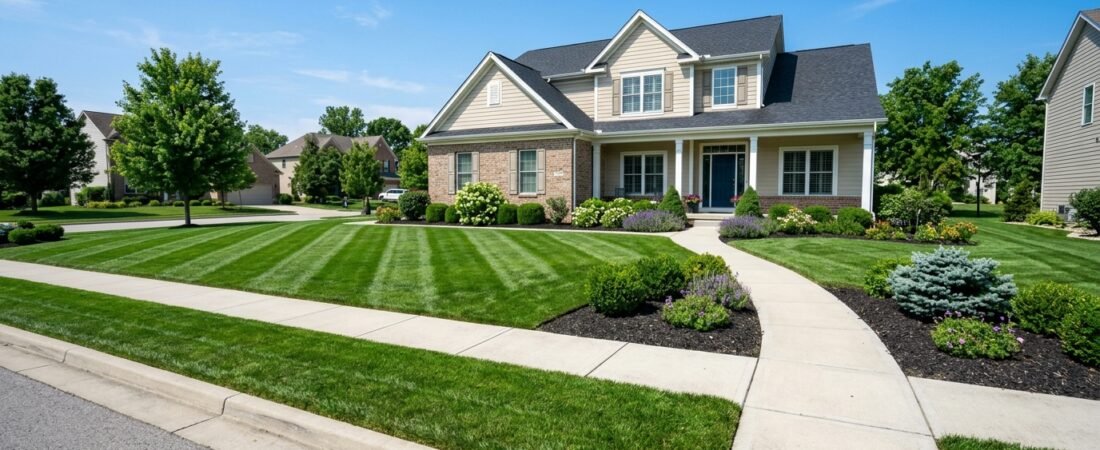
For homeowners across southern lawns and the transition zone, selecting the right warm-season turfgrass dictates your maintenance calendar for the next decade. The three dominant species—Bermudagrass, St. Augustinegrass, and Zoysiagrass—all thrive in high summer heat, but their biological requirements for sunlight, mowing height, irrigation, and herbicide tolerance are completely distinct.
Mowing a St. Augustine lawn at 1 inch will scalp and kill the turf within weeks, while letting Bermuda grow past 3 inches causes stem elongation and yellow undergrowth. Understanding these exact biological thresholds is the foundation of a healthy, weed-free lawn that stays resilient year after year.
1. Sunlight & Shade Tolerance: The Critical Differentiator
Direct Rule: Bermudagrass requires a minimum of 7 to 8 hours of direct, unfiltered sunlight daily. In tree shade, Bermuda thins out rapidly and surrenders to moss and weeds. If your property features mature oak or pine trees, St. Augustine or Zoysia are non-negotiable alternatives.
- Bermuda: Very poor shade tolerance (<10%). Best for wide open acreage, sports fields, and full-sun suburban yards.
- St. Augustine: Exceptional shade performance. Cultivars like Seville, Palmetto, and CitraBlue thrive on just 4 to 5 hours of filtered sunlight.
- Zoysia: Moderate to good shade tolerance. Fine-bladed Zoysia varieties like Zeon and Emerald perform remarkably well under tree canopies while maintaining dense emerald color.
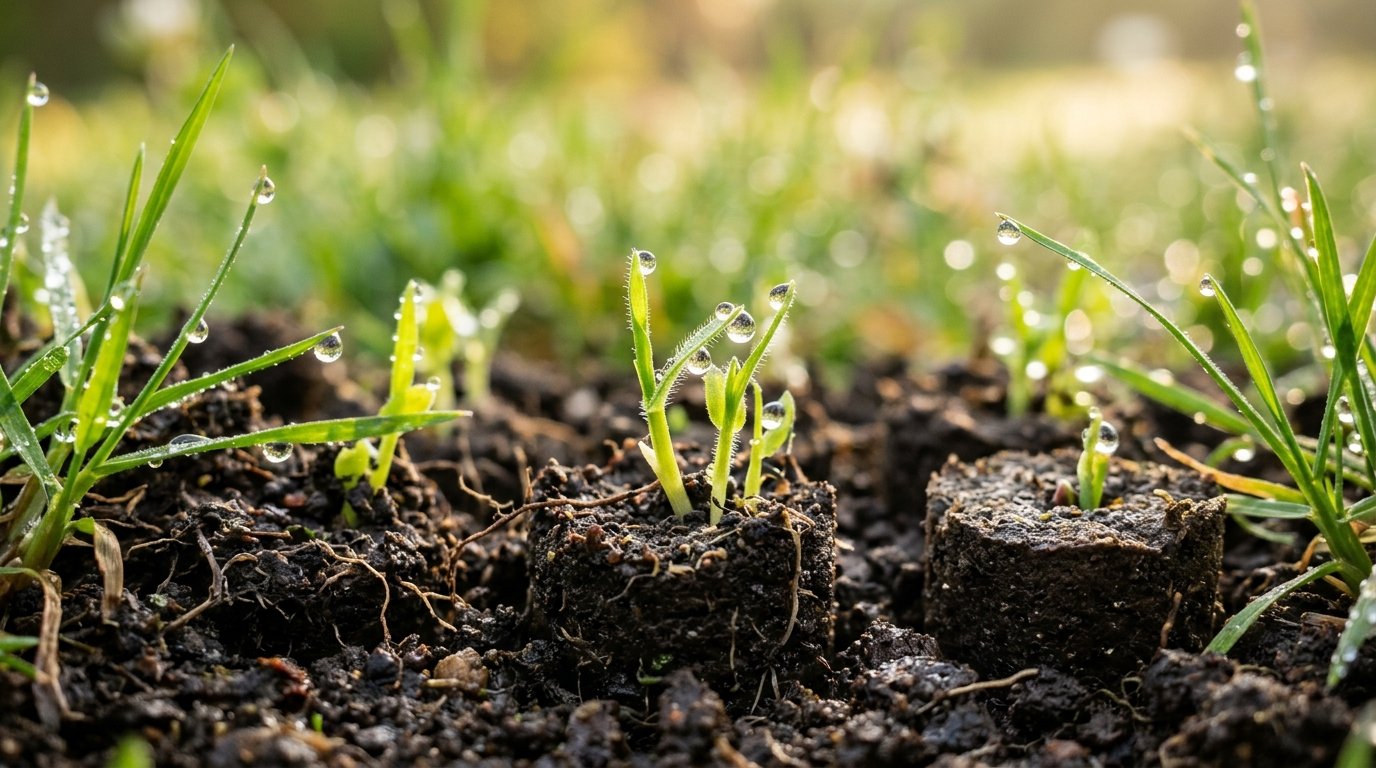
St. Augustine stolons (left) require higher mowing heights compared to fine-bladed Bermuda and Zoysia root networks.
2. Mowing Height & Frequency Comparison
Proper mowing height governs root depth and weed suppression. Cutting too short weakens root mass and exposes soil to weed seeds, while cutting too high encourages fungal buildup:
| Turfgrass Species | Ideal Mowing Height | Mower Type | Mowing Frequency |
|---|---|---|---|
| Bermudagrass | 1.0″ – 2.0″ (Hybrid: 0.5″ – 1.0″) | Rotary or Reel mower | Every 4–5 days in peak summer |
| St. Augustinegrass | 3.5″ – 4.0″ (Dwarf: 2.5″) | Standard Rotary mower | Every 6–7 days |
| Zoysiagrass | 1.5″ – 2.5″ | Rotary or Precision Reel | Every 7–10 days (slower growth) |
3. Herbicide Sensitivity: Avoiding Accidental Chemical Injury
Warning for Homeowners: Common broadleaf weed killers containing 2,4-D, dicamba, or triclopyr will severely yellow or completely kill St. Augustinegrass. St. Augustine possesses broad, fleshy stolons that absorb selective post-emergents much faster than Bermuda or Zoysia.
Always verify the chemical label: St. Augustine requires Atrazine or specialized southern formulations (like Celsius WG or Blindside), whereas Bermudagrass has exceptional chemical resistance and tolerates standard post-emergent selective herbicides with ease.
4. The Seasonal Lawn Maintenance Calendar
Maintaining warm-season turf follows a seasonal rhythm tied directly to soil temperature triggers:
- Early Spring (55°F Soil Benchmark): Apply your pre-emergent herbicide barrier to stop crabgrass and sandbur before germination. See our Pre-Emergent Timing Guide.
- Late Spring (65°F Soil Benchmark): Perform core aeration to relieve winter soil compaction and encourage vigorous root expansion. Read our Core Aeration vs Liquid Aeration Breakdown.
- Summer (Peak Heat): Irrigate deeply with 1 to 1.5 inches of water once or twice weekly at sunrise rather than light daily sprinkling to force deep root searching.
- Fall (Before First Frost): Transition to low-nitrogen, high-potassium winterizer fertilizer to protect turf crowns. Follow our Winter Lawn Prep Checklist.
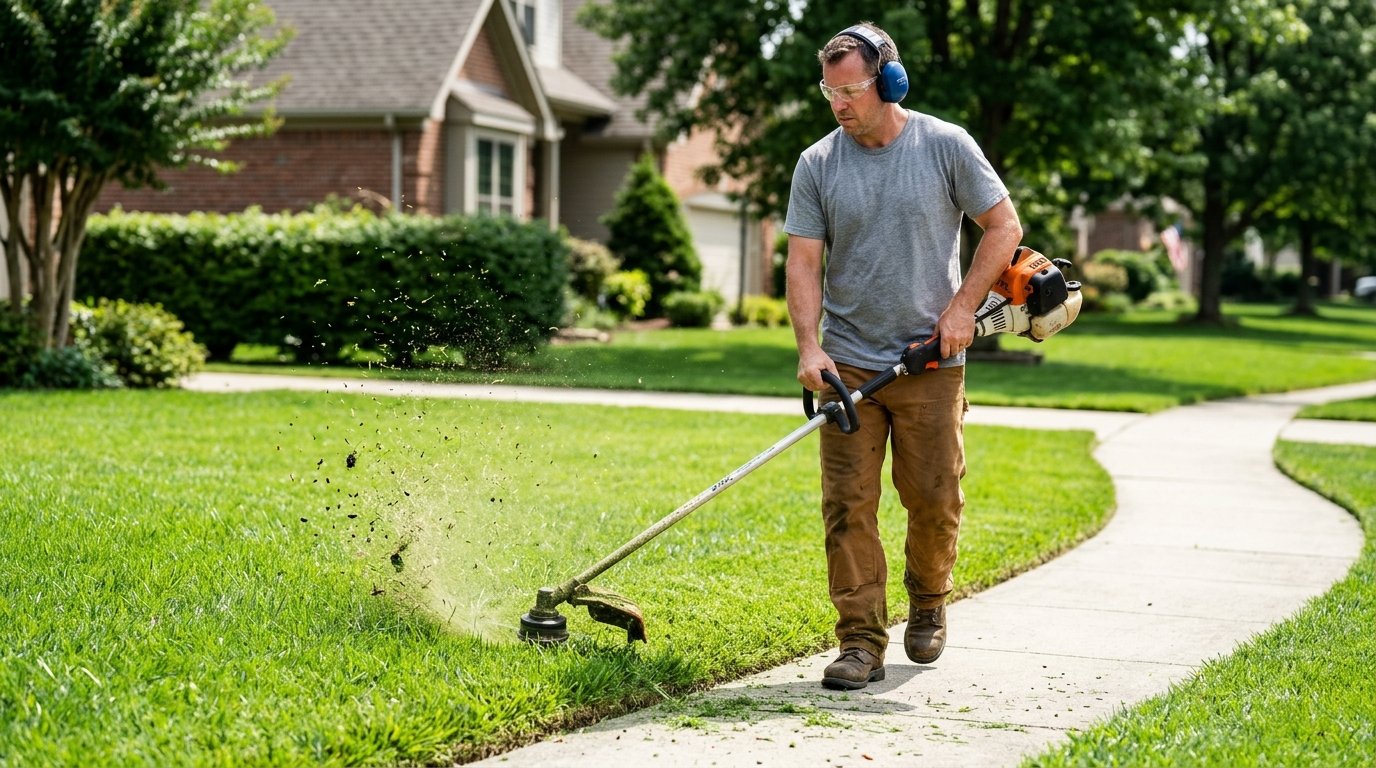
Crisp string-trimmer edges and clean curb lines elevate neighborhood pride and prevent grass encroachment into concrete joints.
Know an Elderly Neighbor Who Needs Yard Help?
Good Neighbor Crew provides 100% free lawn mowing, trimming, and seasonal yard restoration for elderly seniors, disabled veterans, and struggling single parents. We never charge a dime. Nominate someone in your neighborhood today.