
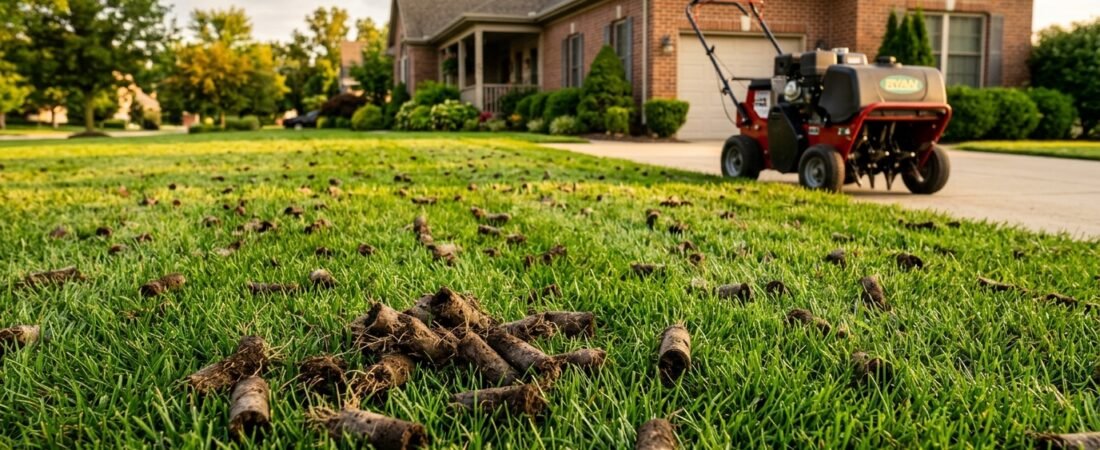
Mechanical core aeration physically extracts 2-to-3-inch soil plugs to relieve compacted bulk density, break through thick thatch, and create direct seed-to-soil seedbeds for overseeding. Liquid aeration uses surfactants and humic acids to loosen superficial soil tension over multiple applications without pulling plugs. If your lawn has heavy clay, vehicle traffic, thatch over 0.5 inches, or requires fall overseeding, mechanical core aeration is irreplaceable. Liquid aeration is best reserved as a low-effort maintenance supplement for lightly compacted sandy or loamy soils with active irrigation.
Compacted soil is the silent killer of suburban lawns. When foot traffic, lawn mowers, and heavy seasonal rainfall compress soil particles together, pore space disappears. Without microscopic air pockets, grass roots suffocate, water pools on the surface instead of infiltrating, and fertilizers wash away into storm drains. The two competing remedies—traditional mechanical core aeration and modern chemical liquid aeration—promise to unlock your soil, but they operate through completely different physical and biochemical mechanisms.
Core Aeration vs Liquid Aeration: Direct Head-to-Head Comparison
Understanding the functional differences between physical soil extraction and chemical surfactant dispersion is essential before investing time or equipment hire fees. Here is how both methods compare across critical soil metrics:
How Mechanical Core Aeration Works (The Science of Bulk Density)
Soil bulk density is the mass of dry soil divided by its total volume. In a healthy lawn, healthy soil density ranges from 1.1 to 1.3 g/cm³. When bulk density exceeds 1.55 g/cm³ in clay soils, root elongation ceases entirely because grass roots cannot physically exert enough pressure to push soil particles aside.
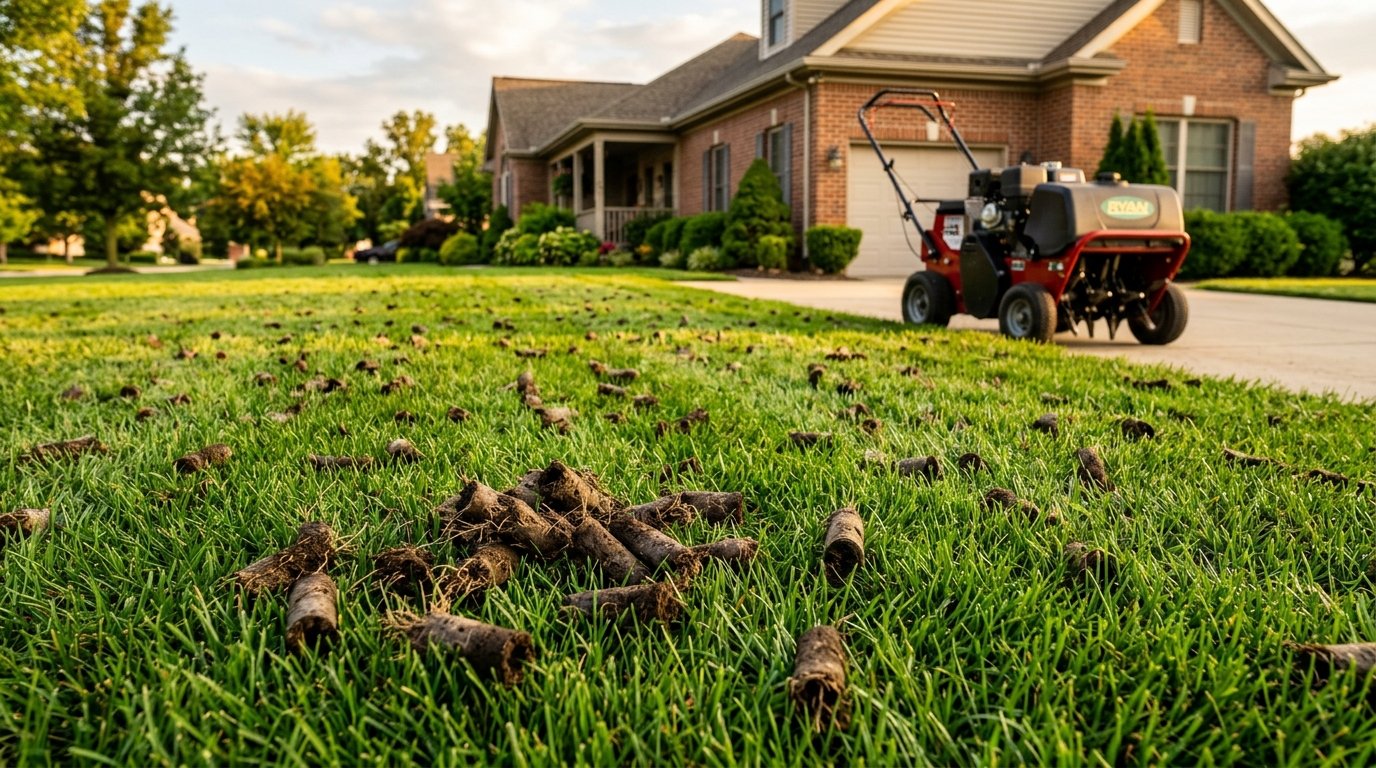
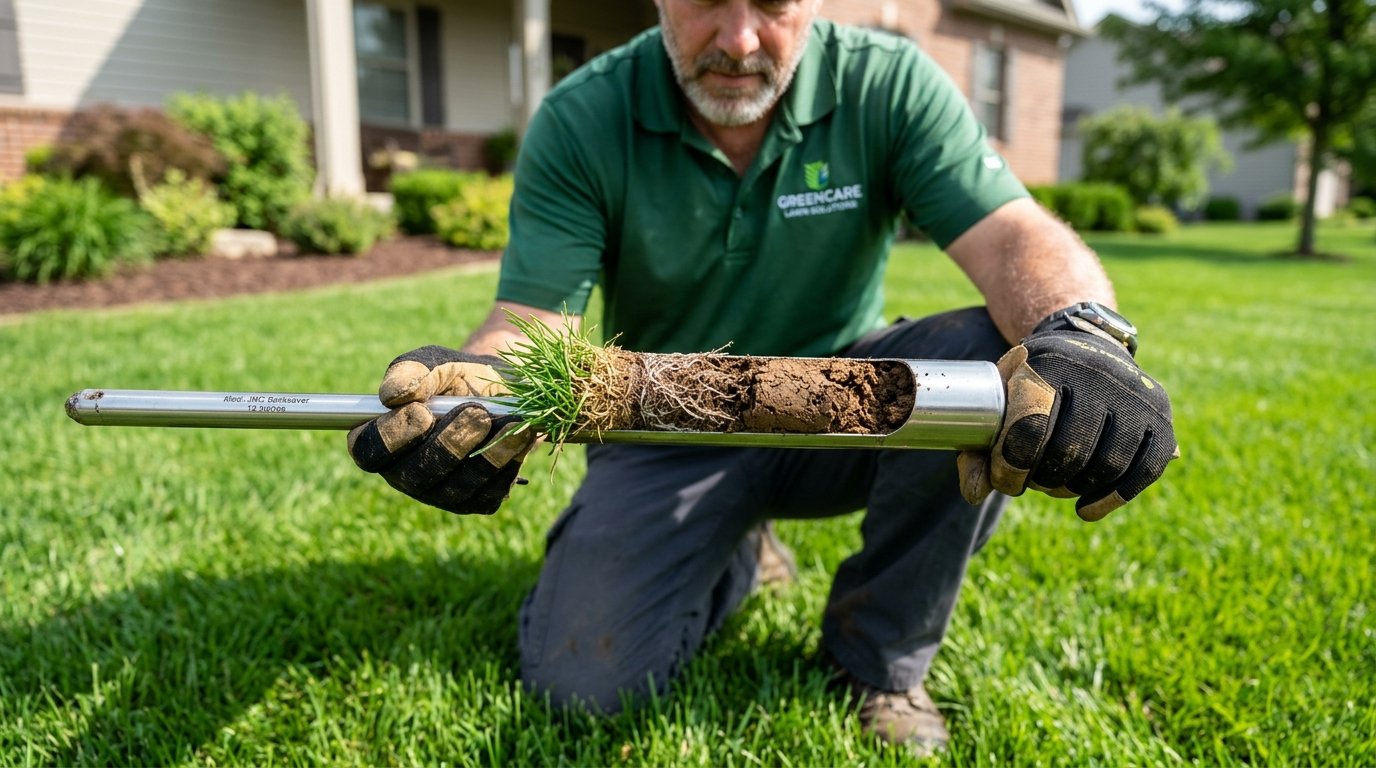
Mechanical core aerators use hollow cylindrical spoons or tines that drive into the ground, severing compact soil bridges and pulling up cores 0.5 to 0.75 inches in diameter and 2 to 3.5 inches deep. This instant removal provides three structural benefits:
- Lateral Stress Relief: The soil surrounding each extraction hole expands laterally into the empty cavity, softening the entire root zone without tearing turf surfaces.
- Gas Exchange Reactivation: Toxic carbon dioxide accumulated around roots vents into the atmosphere, while fresh oxygen floods the rhizosphere to fuel aerobic microbial breakdown.
- Thatch Remediation: If your turf has accumulated dense dead organic matter, pairing core aeration with bare patch repair and overseeding restores vigorous green density within two weeks.
How Liquid Aeration Works (Surfactants & Humates)
Commercial liquid aeration formulas (such as ammonium laureth sulfate, yucca extracts, and concentrated potassium humates) operate on colloidal surface tension rather than brute force. They consist of two active components:
- Non-Ionic Surfactants: Wetting agents break the cohesive hydrogen bonds of water molecules. In hydrophobic or tightly packed soils, this allows irrigation water to penetrate micro-fissures rather than beading up or running off.
- Humic & Fulvic Acids: Liquid organic matter feeds indigenous bacteria and fungi. As microbial populations bloom, they secrete glomalin—a natural biological glue that binds microscopic clay particles into loose, crumbly aggregates known as soil peds.
While scientifically legitimate, liquid aeration is a gradual process requiring 2 to 3 consecutive treatments over a 60-day window. It cannot instantly relieve hardpan compaction or punch holes through a 1-inch thatch layer.
Step-by-Step Core Aeration Protocol for Maximum Soil Recovery
If your lawn fails the screwdriver test, execute this proven five-step protocol to maximize results and prevent turf damage:
- Step 1: Irrigate 24 to 48 Hours Prior: Never aerate bone-dry soil or waterlogged mud. Apply 0.5 inches of water the day before. The soil should feel like a wrung-out sponge, allowing tines to sink to their full 3-inch depth without tearing turf.
- Step 2: Flag All Underground Obstacles: Walk the property and mark sprinkler heads, valve boxes, drip lines, and shallow cables with high-visibility utility flags. Direct tine impacts will shatter PVC fittings.
- Step 3: Make Double Perpendicular Passes: Push the aerator across the lawn in parallel stripes. In heavily compacted zones, make a second pass perpendicular (at a 90-degree angle) to the first. Aim for 20 to 40 core holes per square foot.
- Step 4: Leave the Soil Plugs in Place: Do not bag or rake the plugs. When combined with routine mowing—such as using a mulching mower for autumn leaf cleanup—the plugs disintegrate within 10 to 14 days.
- Step 5: Immediate Overseeding & Starter Fertilizer: Apply premium certified grass seed and balanced starter fertilizer within 24 hours of aerating. Seeds tumbling into the open core holes enjoy perfect soil contact and germination temperatures.
Community Lawn Care Tip from Good Neighbor Crew
Renting a commercial walk-behind aerator costs $70 to $110 per half-day. Because most suburban yards take under two hours to aerate, partner with 2 or 3 neighbors on your street to share a single weekend rental. Not only does this cut individual costs to under $30, but it also transforms an annual chore into a neighborhood community project. Learn more about our mission on our About Us page.
Frequently Asked Questions About Lawn Aeration
Can liquid aeration completely replace mechanical core aeration?
No. Liquid aeration cannot replace mechanical core aeration in severely compacted soils or lawns with excessive thatch over 0.5 inches (learn the difference in our dethatching vs aerating diagnostic guide). While liquid humic and surfactant solutions loosen surface tension at microscopic levels, mechanical core aeration physically removes soil plugs, instantly relieving sub-surface bulk density and creating direct channels for root expansion and immediate overseeding.
Should you rake up or remove soil plugs after core aerating?
No, leave the aeration plugs on the lawn. Over the next 1 to 2 weeks, rain, watering, and regular mowing will break the plugs down naturally. As they decompose, the soil microbes in the plugs actively digest organic surface thatch and return vital minerals directly back into the root zone.
Can you overseed and fertilize on the same day as core aeration?
Yes, immediately after core aerating is the single best time to overseed and apply starter fertilizer. The open 2-to-3-inch core holes provide optimal seed-to-soil contact, shielding delicate grass seed from drying winds and birds while guaranteeing moisture retention for rapid germination.
How do you test if your lawn needs aeration?
Perform the simple screwdriver test: push a standard 6-inch metal screwdriver into moist turf. If the blade cannot easily penetrate 3 to 4 inches into the soil with moderate hand pressure, your soil is heavily compacted and requires core aeration.